If your garage door is going to fail, it will almost always pick the coldest, most inconvenient morning of the year to do it. In Cleveland, that is not bad luck, it is physics. Lake-effect snow off Lake Erie, hard overnight freezes, and the constant thaw-and-refreeze of a Northeast Ohio winter put more strain on garage door springs than almost anything else, and a spring that limped through the fall will snap with a bang the first time the temperature drops into the teens.
Here is exactly why winter is so hard on your springs, the warning signs to watch for, and the simple maintenance steps that keep your door working from Lakewood to Shaker Heights all season long. If a spring has already gone, skip ahead and call (216) 925-4466, our trucks carry the common springs and we are open 24/7.
Why Cold Weather Snaps Garage Door Springs
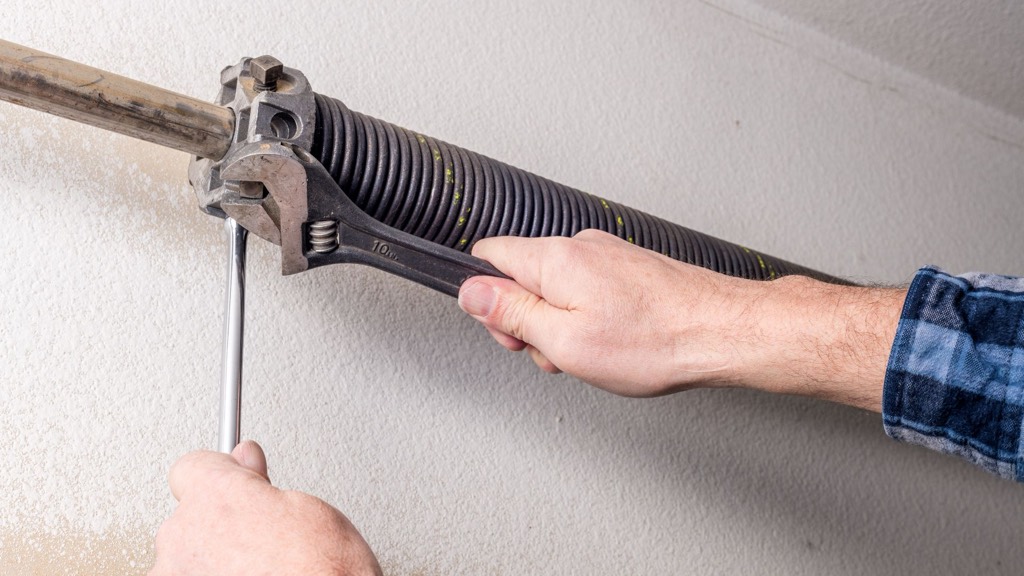
Your garage door does not lift because of the opener motor, it lifts because of the springs. A tightly wound torsion spring (or a pair of stretched extension springs) stores the energy needed to counterbalance a door that can weigh 150 to 250 pounds. The opener just nudges that balanced weight up and down. When a spring fails, the opener is suddenly trying to lift the full weight of the door on its own, which is why a broken spring almost always leaves you stuck.
Cold weather attacks those springs in three ways:
- Steel gets brittle. Metal contracts and loses ductility as it gets colder. A spring that flexes fine at 50 degrees becomes far more likely to crack at 15 degrees, especially if it already has microscopic fatigue cracks from years of cycling.
- Freeze-thaw cycles add stress. Cleveland rarely stays at one temperature. Moisture works into the coils, freezes, expands, then thaws, over and over. Every cycle is a tiny extra load the spring was never designed for.
- Doors freeze to the ground. When the bottom weatherseal ices to the slab, the opener (and the springs) fight against a door that is physically stuck. That spike in tension is often the last straw for a tired spring.
Warning Signs Your Spring Is About to Go
Springs rarely fail without a few weeks of warning. If you notice any of these in October or November, get them looked at before the worst of the cold arrives:
- The door feels heavy or lopsided. Pull the manual release and lift by hand. A balanced door should rise smoothly and stay put halfway up. If it slams down or fights you, the springs are losing tension.
- Loud bangs or grinding. A gunshot-like bang from the garage is almost always a torsion spring letting go. Grinding usually means worn coils or a failing bearing.
- The opener strains or reverses. If your opener labors, stutters, or backs off partway up, it is often compensating for weak springs, not a motor problem.
- Visible gaps or rust. A 2-inch gap in the torsion spring coil means it has already snapped. Surface rust accelerates winter failures and is easy to spot.
- Cables hanging loose. When a spring breaks, the lift cables go slack and can jump off the drum, which can also throw the door off its tracks.
What To Do When a Spring Breaks
First, do not keep hitting the opener button. With a broken spring the door is at its full dead weight, and forcing the motor can strip the gears, bend the track, or snap a cable, turning a single repair into several. Instead:
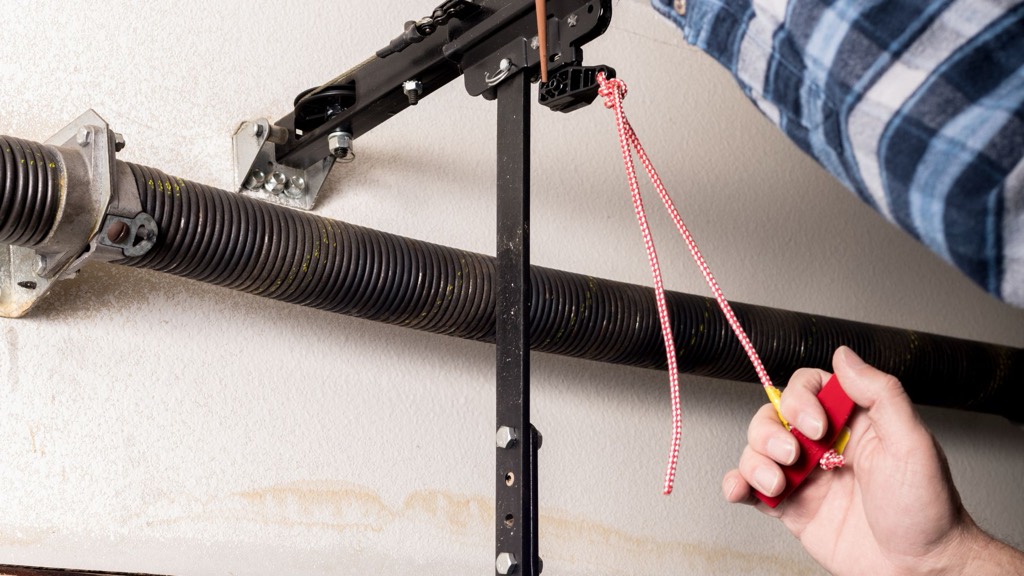
- Pull the red emergency release cord to disconnect the opener.
- Leave the door down. Do not try to prop a heavy door open.
- Keep hands and fingers away from the springs and cables, they are under extreme tension even when broken.
- Call a pro for same-day garage door spring repair. Torsion spring work is genuinely dangerous and is not a safe DIY job.
We replace springs in matched pairs. If one spring on a two-spring door breaks, the other is the same age and will usually fail within weeks, so doing both at once saves you a second service call in the dead of winter. If the door itself is old, rusted through, or no longer balances even with new springs, we will lay out a new garage door installation option too, no pressure either way.
How To Prevent Broken Springs This Winter
You cannot change the weather, but you can make your door far more likely to survive it. A little fall maintenance goes a long way:
- Lubricate the moving parts. Use a silicone or lithium garage door spray (never WD-40) on the springs, rollers, hinges, and bearings every fall. Lubricated steel flexes more easily and resists cold-weather cracking.
- Test the balance. Disconnect the opener and lift the door halfway by hand once a season. If it will not hold position, the springs need adjusting before they fail.
- Keep the bottom seal from freezing. Clear snow and ice from the threshold and replace a cracked weatherseal so the door is not iced to the slab each morning.
- Insulate where you can. An insulated door and a weather-sealed garage hold heat better, which keeps the springs warmer and less brittle overnight.
- Book an annual tune-up. A quick professional inspection catches a worn spring, a fraying cable, or a misaligned keypad and opener system while it is still a cheap fix.
Businesses are not off the hook either. Loading-dock and warehouse doors cycle dozens of times a day, so winter wear adds up fast. If you manage a property in Cleveland, Parma, or Euclid, our commercial garage door services include preventive spring and cable checks that keep your bays moving through the season. And when something fails after hours, our 24/7 emergency service means a frozen, stuck door never has to wait until morning.
Key Takeaways
- Cold makes steel springs brittle, and Cleveland's freeze-thaw cycles are why most break in winter.
- Watch for a heavy or lopsided door, loud bangs, a straining opener, gaps in the coil, or loose cables.
- If a spring breaks, disconnect the opener, leave the door down, and call a pro, never force the motor.
- Fall lubrication, balance tests, and an annual tune-up dramatically cut your odds of a winter breakdown.
Broken Spring? We Are Open 24/7.
Garage Door Doctors Cleveland handles same-day spring repair across Cleveland and Cuyahoga County, even on the coldest mornings. Free estimates, local techs, and the parts on the truck to fix it on the first visit.
Frequently Asked Questions
Why do garage door springs break more in winter?
Steel torsion springs contract and become more brittle in the cold. Cleveland's deep freezes and freeze-thaw cycles add stress with every cycle, so a spring already near the end of its 10,000-cycle life will usually fail on the coldest mornings.
Can I still open my garage door if a spring breaks?
You should not. A door with a broken torsion spring is dangerously heavy (often 150 to 250 pounds) and forcing the opener can burn out the motor or bend the track. Disconnect the opener, leave the door down, and call for same-day spring repair.
How much does garage door spring repair cost in Cleveland?
Cost depends on the spring type and size, so we quote on-site before any work starts. We carry the common torsion and extension springs on our trucks and offer free estimates on every job across Cleveland and Cuyahoga County.
How long do garage door springs last?
Most standard springs are rated for about 10,000 cycles, roughly 7 to 9 years of normal use. In Cleveland's climate, springs without winter maintenance often fail sooner. Annual lubrication and balance checks can extend that life considerably.